So if I buy in Manahawkin instead of on the island, am I really saving that much?
It's the question every second buyer asks once they've spent a weekend touring both sides of the Route 72 causeway. The mainland home is bigger for less money. The island home has water somewhere nearby. On paper, the math looks simple: pick a number, pick a lifestyle, done.
The math isn't wrong. It's just incomplete. The list price only accounts for what you pay once. It says nothing about what you pay every year after, and it says nothing about the one physical fact that makes Long Beach Island a different kind of asset than anything fifteen minutes inland.
What Manahawkin Actually Costs Right Now
Mainland Ocean County has been a genuinely active market this year. Over the three months ending May 2026, homes in Manahawkin sold at a median price of $555,000, up 1.2 percent from the same period a year earlier, with the typical home going under contract in around 12 days. By July 2026, asking prices had climbed further, with Manahawkin listings carrying a median ask of roughly $649,000.
That's a real, fast-moving mainland market. It's also a market where flood coverage, while still worth carrying, isn't a structural given the way it is on a barrier island. Plenty of Manahawkin buyers close without a flood policy attached to their monthly payment at all, because their parcel sits outside a mapped Special Flood Hazard Area.
Cross the bridge, and that assumption stops holding.
Same Street, Same Flood Zone, Different Bill
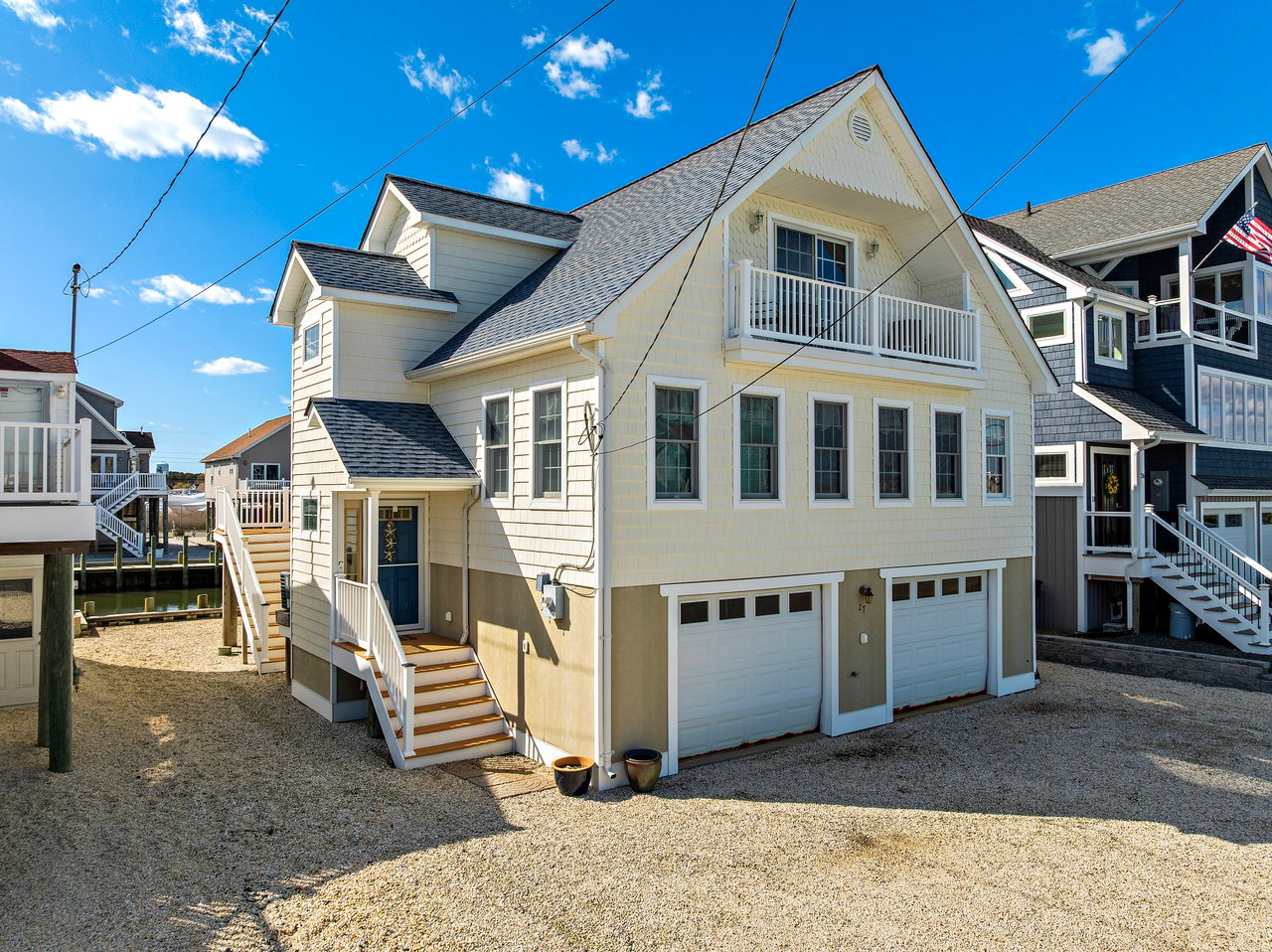
Here's the part of the comparison most buyers skip entirely. On Long Beach Island, flood insurance isn't priced by neighborhood anymore. Since FEMA's Risk Rating 2.0 methodology took effect, two houses on the same block, in the same flood zone, can carry premiums that differ by thousands of dollars a year, and the reason has almost nothing to do with location.
It has to do with how the house was built.
A properly elevated LBI home, one built or rebuilt on pilings with the first finished floor well above Base Flood Elevation, typically carries a flood premium between $1,200 and $1,500 a year. That's only a modest step above the statewide New Jersey average, which runs somewhere between $1,011 and $1,137 a year across all flood zones, inland and coastal alike.
Move to an oceanfront V-zone property, the kind facing open Atlantic wave action directly, and that number can jump to $4,700 a year or more, sometimes climbing into five figures on larger luxury builds.
The gap between those two numbers isn't really about the ocean being nearby. It's about construction. Walk down almost any street in Long Beach Township or Harvey Cedars and you'll find a 1960s-era home sitting close to grade next to a home from the last decade raised twelve feet in the air on concrete pilings. Same flood zone. Same storm exposure on paper. Very different bill.
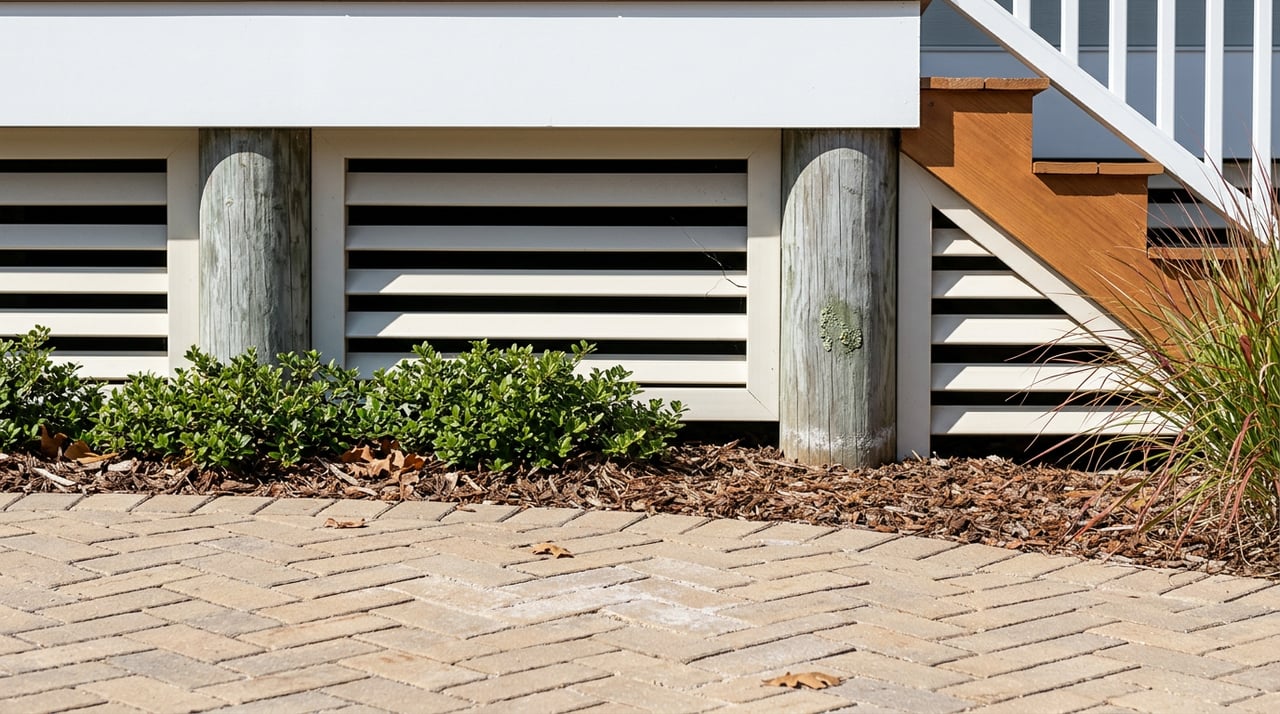
Even the small details compound. A home built high enough to qualify for a favorable rating can still get penalized for missing the required number of flood vents in its foundation, the openings that let floodwater pass through rather than pressurize against the walls. One documented case put that difference at roughly $2,600 a year without proper venting, dropping to about $600 a year once the vents were installed correctly. Same house, same lot, same storm risk. The only thing that changed was a construction detail most buyers never think to ask about.
Add ordinary homeowners coverage on top of flood, and the range widens further. A Cape Cod-style home on LBI typically runs $1,500 to $2,500 a year in homeowners premiums, while larger homes with more amenities often land between $2,500 and $3,500. Most coastal policies also carry a separate wind or named-storm deductible, calculated as a percentage of the dwelling's insured value rather than a flat dollar figure. On a home insured for $700,000, that deductible alone can run anywhere from $7,000 to $35,000 depending on the policy.
Here's what that looks like stacked against a comparable mainland purchase:
| Cost category | Mainland (typical) | LBI, elevated, A zone | LBI, oceanfront V zone |
|---|---|---|---|
| Flood insurance | Often optional | $1,200-$1,500/yr | $4,700+/yr |
| Homeowners insurance | Standard inland rate | $1,500-$3,500/yr | Higher, size-dependent |
| Named-storm deductible | Standard deductible | 1-5% of dwelling value | 1-5% of dwelling value |
None of that shows up on a listing sheet. All of it shows up on a closing disclosure.
One Bridge, One Way Off
The other piece of this comparison isn't a cost at all. It's a structural fact about the island itself, and it's one the New Jersey Department of Transportation states plainly in its own project documentation for the Route 72 causeway: Route 72 is the only access point to and from Long Beach Island, and it's officially classified as a coastal evacuation route.
That's not a marketing detail. It's a real constraint on how the island functions, one the state has spent significant money trying to keep functional. The Manahawkin Bay Bridge crossing, part of a broader causeway rehabilitation project reported at $360 million across multiple contracts, was still finishing minor work as recently as January 2026, more than five years past its original completion target, according to reporting from The SandPaper.
For a buyer, the practical version of this fact is simple. Every car on and off LBI, in a normal Tuesday commute or a hurricane evacuation, funnels across the same bridge landing in Ship Bottom. A mainland Manahawkin home has no equivalent chokepoint. That doesn't make one location better than the other. It makes them different products with different risk profiles, and that difference deserves to be priced into the decision the same way the insurance numbers do.
What Actually Changes the Math
Put the two threads together and the comparison stops being "mainland versus island" and starts being "predictable carrying cost versus construction-dependent carrying cost, plus a single point of access."
A few things worth checking before treating either side of that comparison as settled:
- Ask for the elevation certificate before assuming an island home's flood premium. Two homes with the same address style can carry wildly different numbers.
- Ask whether the foundation has the required flood vents installed. It's a small detail with an outsized effect on premium.
- Factor the named-storm deductible into your carrying cost math the same way you'd factor in property taxes, not as an afterthought.
- If evacuation logistics or seasonal bridge traffic matter to how you'll use the property, treat that as a lifestyle input, not a footnote.
The mainland home in Manahawkin isn't automatically the cheaper decision just because the sticker price is lower, and the island home isn't automatically the pricier one just because it sits on a barrier beach. The honest comparison runs through the insurance binder and the flood certificate, not just the listing price.
A Few Common Questions
Does every home on Long Beach Island need flood insurance? Most parcels sit within a mapped Special Flood Hazard Area, which means a federally backed mortgage will require it. Cash buyers aren't legally required to carry it, though going without coverage on a barrier island is worth thinking through carefully.
Is a mainland home in Manahawkin automatically cheaper to insure? Usually, yes, since flood coverage is often optional rather than required, but standard homeowners coverage still applies and should be compared line by line rather than assumed.
Does flood zone or construction matter more for LBI premiums? Construction, in most cases. Elevation, foundation type, and vent count under Risk Rating 2.0 tend to move the number more than which zone letter appears on the flood map.
Whichever side of the causeway ends up making sense for your family, the details that actually move the monthly number are worth pulling before you write an offer, not after. That's the kind of groundwork BHHS Zack Shore walks Ocean County buyers through on every deal, mainland or island. Find Your Dream Home starts with knowing what you're really comparing.